Verified for v1.0 (launch) · 2026-09-05
Rogue Blight Map Nodes and Random Events: Every Node Type Explained
The eight map node types in Rogue Blight — Enemy, Unknown, Chest, Shop, Statue, Bonfire, Blacksmith, Boss — plus random events, steal chances and every NPC.
The map is the other half of Rogue Blight — a branching trail where routing well is worth as much as any build choice. The game shows its hand upfront: the map legend lists every node type before you take a step. Here’s what each one does and how the players who survive longest route through them.
The eight node types
| Node | Icon | What happens there |
|---|---|---|
| Enemy | Skull | A standard battle with loot and gold on clear. The bread and butter — and your main XP source. |
| Unknown | Question cube | A gamble: could be a free chest, an ambush, or a mimic. Multiple streamers have been eaten by Unknowns they assumed were loot. |
| Chest | Chest | Guaranteed loot — gear, gold, fungi. Occasional mimic surprise anyway, players report. |
| Shop | Stall | Weapons, armor, potions and blessings for gold. No selling your own items, players note. |
| Statue | Statue | Interacting grants a boon — bonuses scale with the statue hub upgrade. |
| Bonfire | Flame | Restores HP and mana; pray for permanent-in-run stat gains; refills potions once the bonfire upgrade is bought. |
| Blacksmith | Hammer | Upgrade gear with salvaged materials, reroll stats at higher tiers. See Equipment. |
| Boss | Horned skull | The floor’s gatekeeper fight — essence, trophies and progression waits behind it. |
Random events and the NPC economy
Between fights, the map sprinkles NPC encounters with choice-driven outcomes and visible success odds:
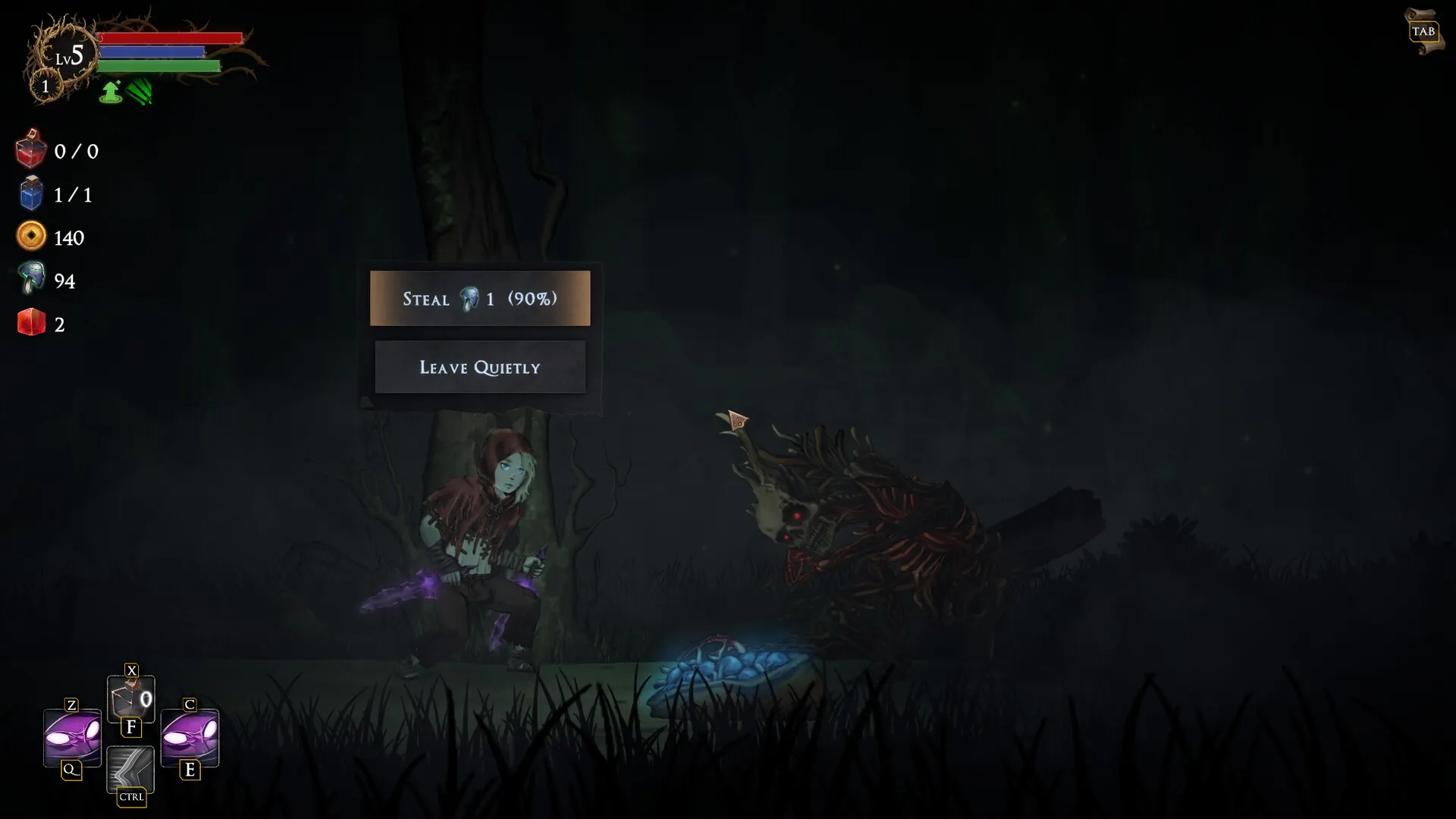
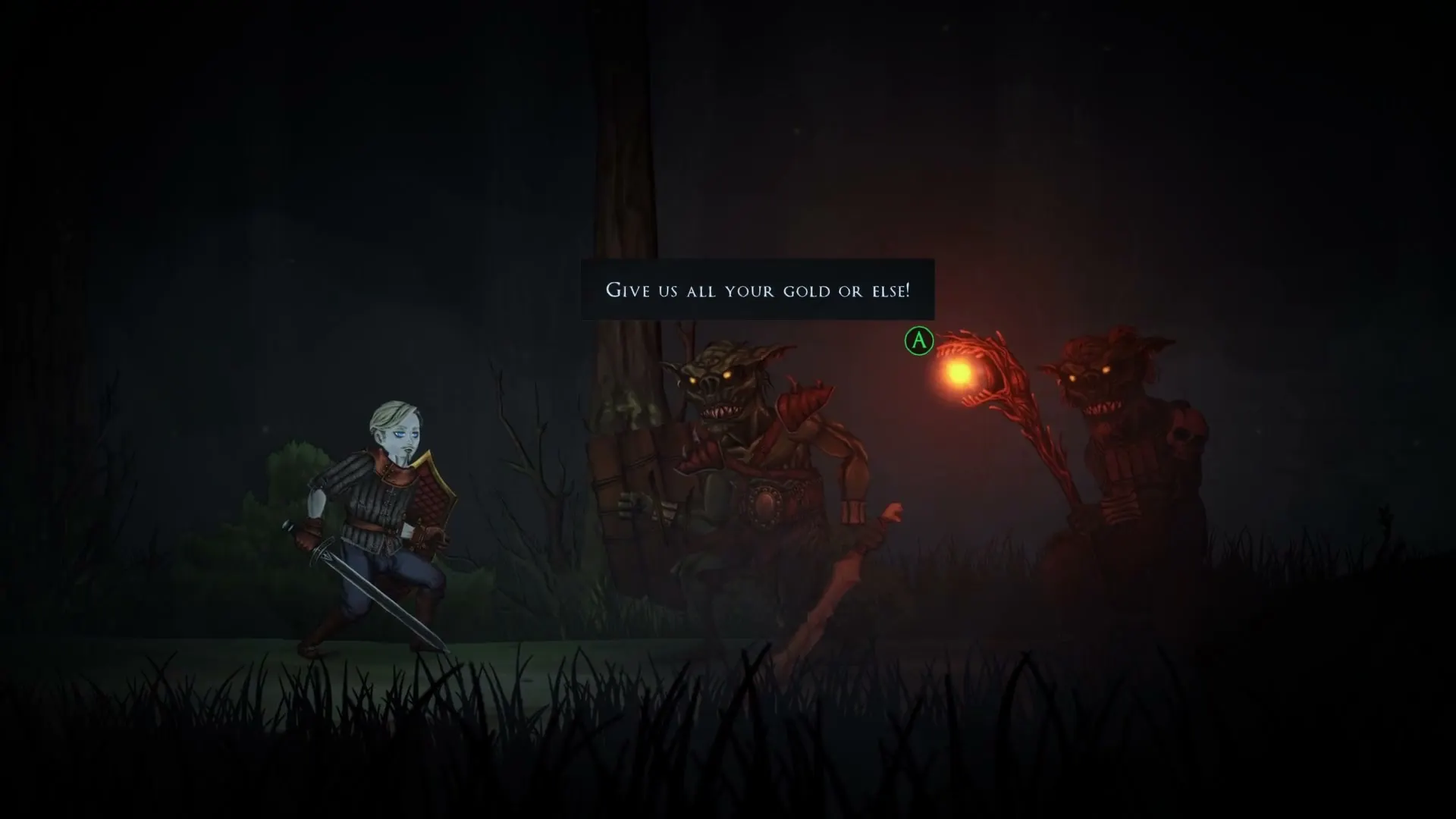
- Steal events. The event screen shows the exact odds — “Steal 1 fungi (90%)” — with a “Leave quietly” alternative. Failing a steal triggers a fight, so the event success upgrade quietly saves whole runs. Not every encounter is friendly by default: ambush-style events also exist (goblins demanding “all your gold or else!”), and refusing means fighting.
- The mushroom trader. Five fungi for a random blessing — the best default fungi sink.
- The potion merchant. Sells potions and potion upgrades (one documented upgrade boosts a health potion’s effect by 75%).
- The resistance teacher. Offers run-long resistance lessons (freeze, bleed, strike and more) — take one on elemental-heavy maps.
- The traveling smith. An event NPC who upgrades a piece of your gear on the spot — free blacksmith work.
- The prophet / blessing keeper. Maintains the blessing compendium and related trades.
- The map maker. Buys challenge map items for fungi and unlocks new map tiers with you.
- The wishing well. Costs gold, prays for luck. Documented results are underwhelming — one streamer’s well “gave nothing at all”. Flavor first, value rarely.
Routing: the actual skill
- Read two nodes ahead, always. The map shows upcoming node types — route so a Bonfire sits before every Boss.
- Shop early, shop often. Unspent gold dies with you. A blessing bought at node three pays for the rest of the run.
- Treat Unknowns as fights. Open them with HP and potions topped up, never as a shortcut while wounded.
- Blacksmith after big drops. Salvage your replaced gear into upgrades immediately — materials don’t carry between runs either.
- Pray HP at bonfires unless your build is mana-starved; the game’s damage curve punishes paper builds harder than dry ones.
Keep reading
- Rogue Blight Beginner's Guide: Surviving Your First RunsEverything a new Rogue Blight player needs: how a run works, what death costs, which upgrades to buy first, and the mistakes that end most first runs. Read guide
- Rogue Blight Fungi Guide: What Fungi Are For and How to Get ThemFungi in Rogue Blight explained — the mushroom currency's confirmed uses (blessings for 5, the Mimic Head's upkeep, selling challenge maps) and every farm source. Read guide
- Rogue Blight Blessings Guide: How to Get Them and Every Confirmed BlessingHow blessings work in Rogue Blight — where to get them, rerolling, and every blessing documented so far, from Nomsa's Fury to the fear-scream stun. Read guide
- Rogue Blight Challenge Maps: How They Work vs Story ModeChallenge Maps in Rogue Blight explained — how they drop as items, when to play or sell them, how they differ from Story Mode, and the leaderboard angle. Read guide
- Rogue Blight Meta Upgrades: Every Permanent Upgrade and What to Buy FirstThe full hub upgrade list in Rogue Blight — max HP, weapon slots, bonfire potion refills, gold recovery, shop stock, blacksmith points — with a buy order that works. Read guide